Array and Disarray: Economic Issues at the Polls

Hi friends,
In several elections held this past Tuesday—from gubernatorial to mayoral races—Americans turned out in record numbers to vote. While campaigns varied, a through-line was the affordability crisis and the growing pressures of economic pain points facing families across the country. President Trump ran for office saying he would lower costs, yet his administration has hewed closely to the vision laid out in the Heritage Foundation’s Project 2025, which promised to prioritize the few over the many. What I saw in this week’s elections is that people are hopping mad about the President and Republicans’ lack of focus on delivering for working families, stripping them of much-needed health care and nutrition support and raising their costs, while finding time to give massive tax cuts to the already very-rich.
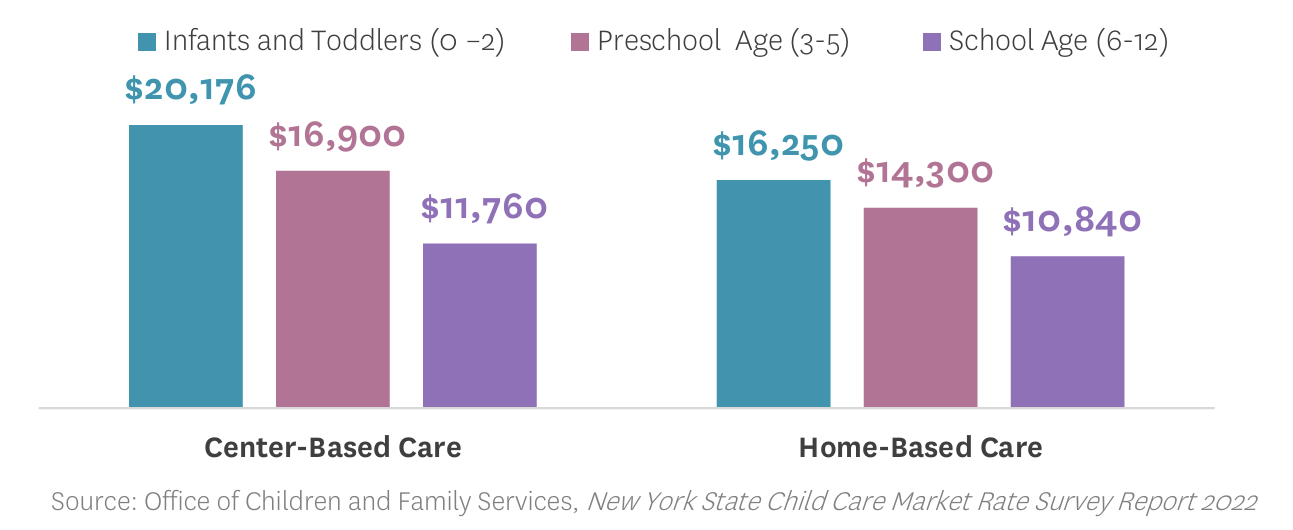
Chart of the Week: In New York City in 2024, the estimated annual cost of center-based childcare was $20,276 for infants, $16,900 for preschool children, and $11,760 for school age children. For a family with a toddler in childcare, these costs could eat up about 28.2% of the typical family’s income among those being raised by a single parent, and 15.8% among married couples with children.
Breaking down the affordability crisis
What does it mean to focus on issues that affect American families?
Electricity prices bubbled up as a growing concern in elections around the country. Electricity accounts for about 10% of the typical family budget. Over the past year, energy prices have risen at double the rate of inflation. We saw electricity prices bubble up as a growing concern in elections around the country.
Democrats: During the Biden administration, the Department of Energy invested $2.2 billion into grid expansion, crowding in an additional $10 billion in private investment; all-in-all, companies invested over $843 billion in clean energy projects in the three years following the Inflation Reduction Act’s passage.
Republican response: In 2024, over 90% of new energy capacity in the United States was clean, but the Republican budget bill slashed clean energy tax credits and added complex sourcing requirements. Since the start of this year, the Trump administration has canceled over $7.5 billion in energy projects aiming to expand the grid. These cuts have already led to over $14 billion in canceled or delayed clean energy investments. By 2030, this policy shift alone will lead to an average annual increase of $130 in household energy bills.
The need for an affordable childcare system—a crisis spanning decades—was an important cost issue in this week’s elections. From 2020 to 2024, annual child care prices rose 29% and by 2024, the national average price of child care was $13,128. This could take up 10% of a married couple or 35% of a single individual’s median household income, above the U.S. Health and Human Services’ affordability index goal of no more than 7% of family income.
Republicans: In 2019, the United States ranked 35th out of 37 countries tracked by the OECD in investment in early childhood education and care. Even so, both before and during the Biden administration, Republicans have attacked any attempts to make childcare more accessible and affordable.
Democratic response: Democrats have consistently prioritized affordable, quality childcare. During the Biden administration, we saw what happens when accessible childcare is viewed as core economic infrastructure: investment goes up, labor force participation goes up, and wages in the care sector go up.
While the Republican-controlled government remains shut down, creating economic uncertainty for families across the country, the Republican-led Congress and the President ignore basic kitchen table costs.
Nearly 38% (16 million) of SNAP beneficiaries are children. On Friday, the Trump administration was ordered to use contingency funds to pay full SNAP benefits, (despite the President’s announcement that they were voluntarily not going to). The Department of Agriculture will only pay 50% the amount a household usually receives. In 2024, the average benefit per person per month was $187.17, but will fall to just around $3.11 per day.
In 2023, 8% of a family’s budget was spent on healthcare. On Sunday, 24 million ACA marketplace enrollees saw an average increase in premiums of more than 75%. Estimates are that this will price 4 million out of healthcare altogether.
Economic implications on the ground
New Jersey: Governor-elect Mikie Sherrill has pledged that she will declare a state of emergency on utility costs, seeking to freeze rates in the face of utility bills in the state rising 17-20%. PJM Interconnection, the energy grid operator for New Jersey and 12 other states, warned that capacity costs—the cost of keeping power on standby—have jumped to a record $16.1 billion for 2026.
Virginia: “Data center valley” has over 600 facilities in operation. Since August of 2024, power bills have increased nearly 7%. In April of 2025, the Trump administration fired all staff from the Low-Income Home Energy Assistance Program, the federal program that nearly 900,000 families in Virginia qualified for to help heat and cool their homes.
New York: As of October 2023, 80% of New York City families could not afford childcare for children under five. In Brooklyn and the Bronx, the costs of childcare and out-of-school care are more than 63% of median income, far more than families can afford. In 2022, an estimated $23 billion in economic output and $2.2 billion in tax revenues was lost due to caregiving responsibilities.
As Americans endured another week of delayed paychecks, an ongoing trade war, and inched closer to burdening families with soaring healthcare costs, the message at the polls was clear: the economy is on the wrong track, and Americans want a change.
Best,
Heather